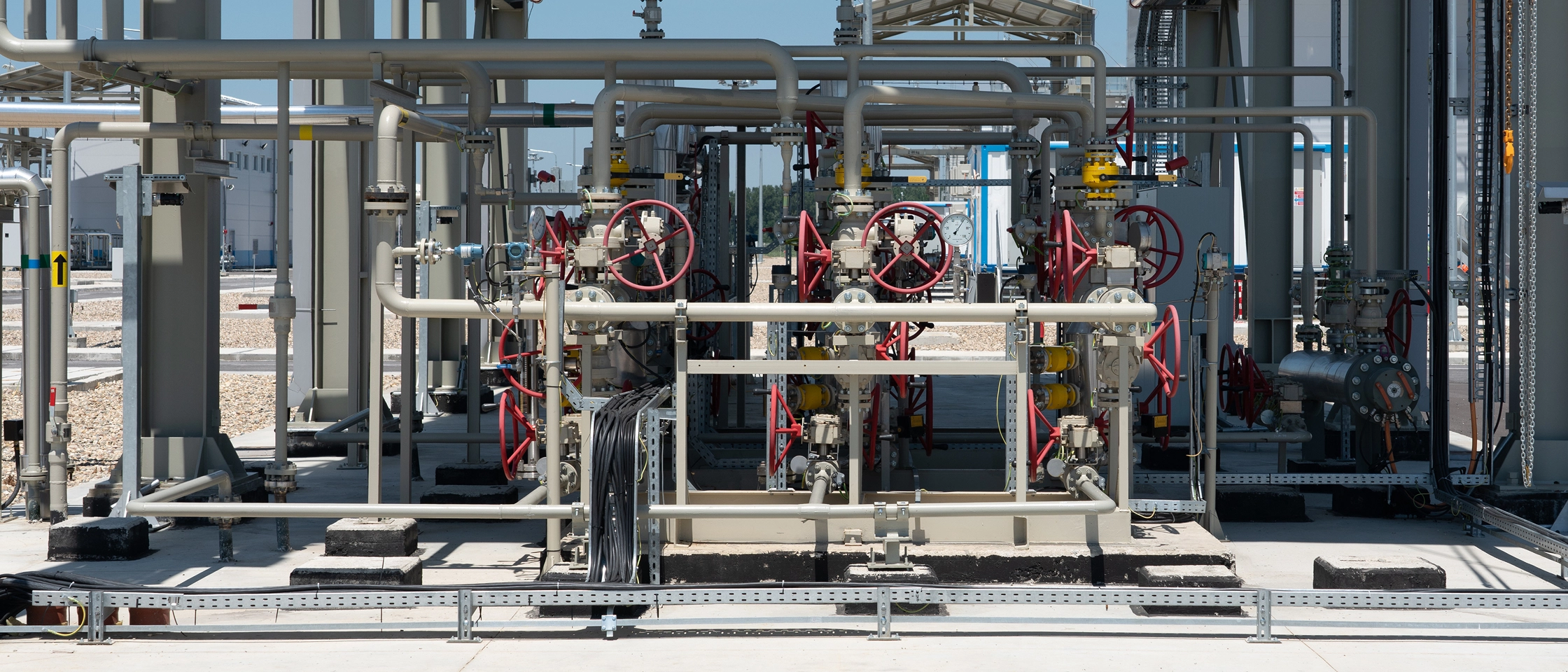
FreeSpin® is a turboexpander-generator that runs on pressure, consumes no water or fuel, and generates zero greenhouse gas emissions.
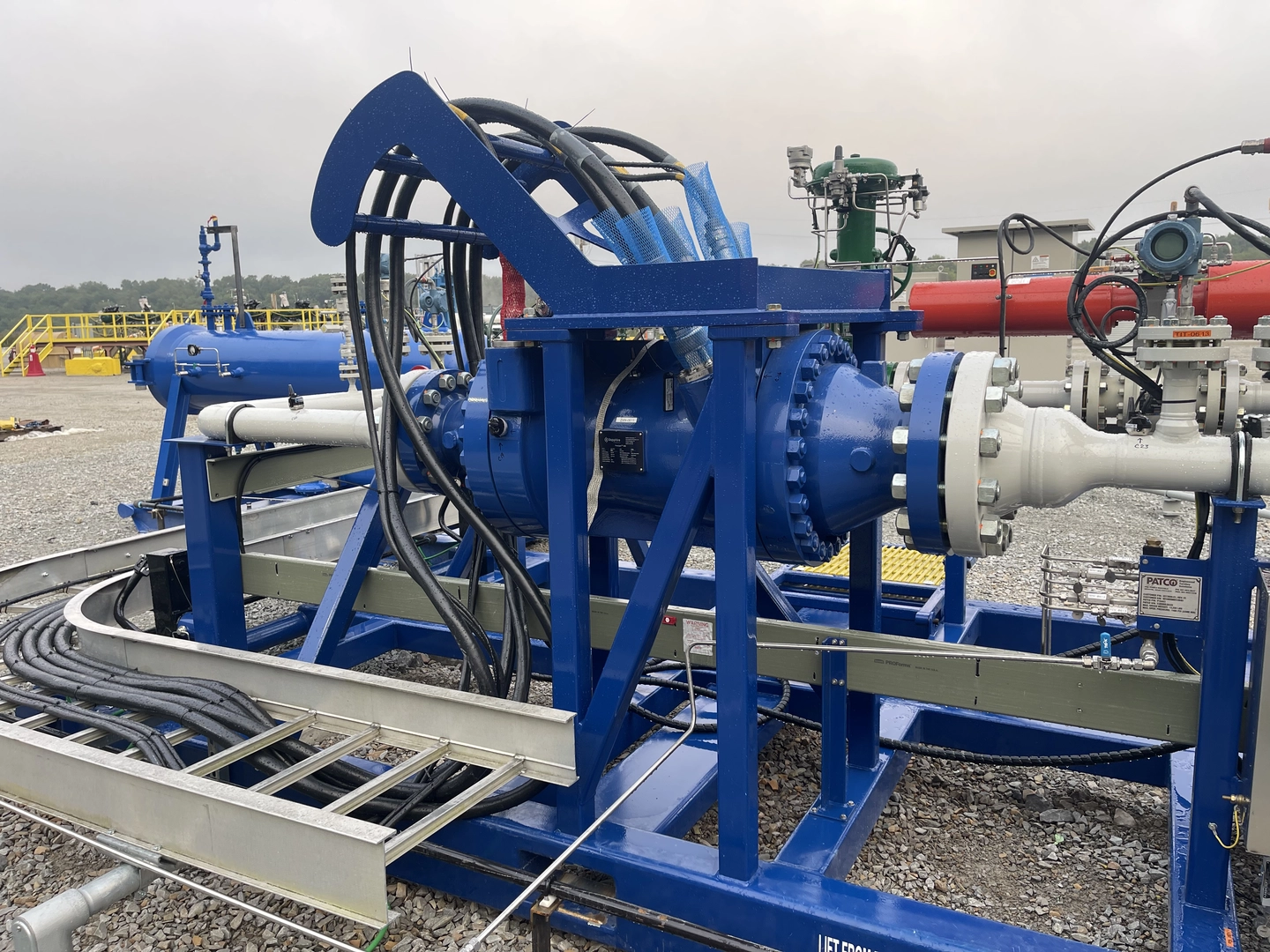
Hermetically sealed enclosure
No water, oil required
No-combustion pressure conversion
Our systems convert pressure into zero-emission electricity and cooling.

The inlet guide vanes, or nozzle, direct gas flow toward the expander wheel at the optimal angle. The nozzle is designed to decrease in cross section, increasing the velocity of the gas as it approaches the expander wheel. The configuration of the nozzle and expander wheel categorize FIT as a radial-inflow, axial-outflow turboexpander-generator.

High-pressure, high-velocity gas enters through the expander wheel from the inlet guide vanes. As the gas moves through the wheel, it depressurizes and causes the wheel to rotate. These components are typically designed to optimize aero efficiency for the pressure reduction process. Application variables affecting wheel design include inlet/outlet temperature, inlet/outlet pressure, volumetric flow rate, and molecular weight. Pressure reduction processes with large pressure ratios may utilize more than one FIT to sequentially recover energy.
The permanent magnet (PM) synchronous generator has variable speed and load capabilities and can operate at speeds up to 30,000 rotations per minute. The PM generator is directly coupled to the expander wheel: it converts the rotational energy created by the depressurized gas moving through the wheel into electricity. The PM generator consists of a powered stator coil, which creates an electric field, and a magnetic rotor that rotates within that field. The latest technology in rare earth magnets is used to achieve high efficiency and high power density.
Active magnetic bearings (AMBs) allow the rotating components of the turboexpander-generator to operate in a levitated condition, reducing friction and minimizing maintenance as compared to conventional bearings. The AMBs’ control system uses artificial intelligence-enabled diagnostic capabilities to provide operators with insight into system health and performance. Remote monitoring services and predictive maintenance packages are available. Locally, a graphical user interface displays real-time data from the AMBs which can be used to describe changes in pressure reduction process conditions like gas flow, temperature, and density.




A turboexpander-generator converts pressure energy into usable electricity and cooling. In FreeSpin®, high-pressure gas expands through a turbine wheel that drives a generator, while the expansion process also creates a low-temperature fluid that can be used in heat exchange processes.
FreeSpin® runs on pressure already present in gas infrastructure. It does not require additional fuel, consumes no water, and generates electricity through a no-combustion process. That makes it a practical way to recover energy that would otherwise be lost during normal pressure reduction.
As gas expands through the turboexpander, pressure energy is converted into rotational energy to drive the generator. At the same time, the gas cools rapidly during expansion, creating a low-temperature fluid stream that can be integrated into facility heat exchange processes.
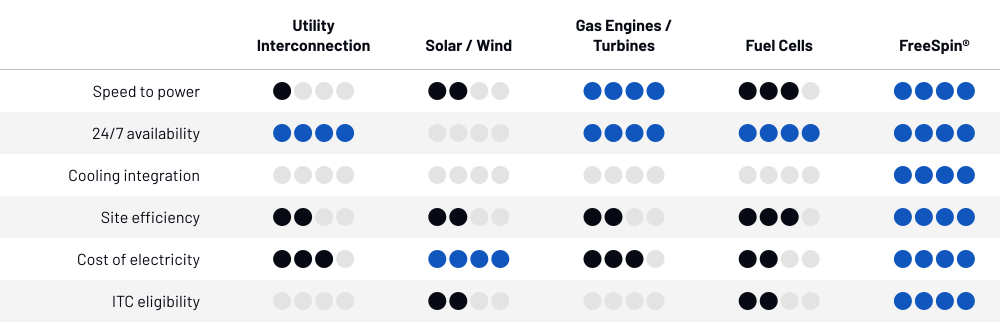
FreeSpin® is a strong fit when a project has access to gas infrastructure and needs fast-to-deploy on-site power, integrated cooling, improved site efficiency, or a way to get more value from existing pressure drop. It is especially relevant for data centers, industrial facilities, and other sites where speed to power, cooling performance, and operating cost matter.