If policy lags too far behind, the risk is not simply inefficiency but fragmentation. Developers will continue to build around constraints, creating parallel systems of supply that operate alongside, rather than within, traditional market structures. Over time, that could make coordination more difficult, not less.
Across the U.S., large-scale data center developers are moving ahead with projects that assume grid power will not be available on the timelines required.
Faced with interconnection queues stretching years into the future and growing uncertainty around transmission buildout, hyperscalers and developers increasingly are turning to behind-the-meter generation, co-located power plants and direct energy supply arrangements to secure capacity.
This is not a marginal shift. Federal regulators are now explicitly grappling with the scale of data center demand and its implications for grid planning and reliability. At the same time, the U.S. government has begun asking data center operators to disclose how much power they are using, underscoring the degree to which data center infrastructure is becoming a national energy concern. For example, the U.S. Energy Information Administration has launched new pilot surveys to better understand data center electricity use.
The underlying issue is not simply one of capacity, but of timing, cost allocation and system design. AI-driven load growth is arriving faster than utilities and RTOs can plan, permit and build new infrastructure. In many regions, developers effectively are being told that sufficient grid capacity will not be available for several years. For projects measured in billions of dollars and tied to rapidly evolving technology cycles, waiting is not a viable option.
As a result, data center developers are beginning to treat power not as a commodity input but as a core project component. In practical terms, “bring your own power” can mean a range of approaches: co-locating gas-fired generation at the data center site, contracting directly with generation assets or building hybrid systems that combine firm generation with renewables and storage. These systems are often designed to operate behind the meter, reducing reliance on the grid while still interacting with it when necessary.
This model is now beginning to surface in policy discussions. After the state regulator required new, large loads to take or pay for 85% of their contracted power capacity, a House representative from Ohio now has proposed federal legislation which would require data centers to “pay their own way” by ensuring that the cost of new infrastructure needed to serve them is not shifted onto ratepayers.
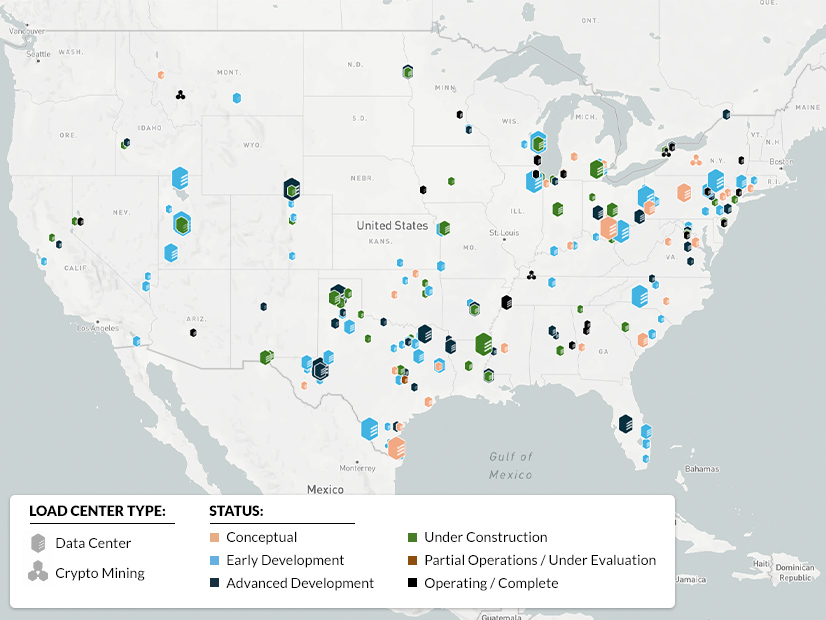
In Texas and other high-growth markets, similar debates are unfolding around whether large new loads should be required to secure dedicated supply rather than relying on existing grid capacity. Texas Senate Bill 6, which took effect in July 2025, effectively says, “if you want to consume enormous amounts of power in Texas, you must help pay for grid upgrades, disclose your plans and be prepared to curtail usage during emergencies.”
At the federal level, emerging language around companies needing to “build, bring or buy” their own power suggests that the concept of BYOP is entering the policy mainstream.
What is important to note is that policy is not creating this model. It is responding to existing market conditions.
For grid operators and utilities, this raises a set of complex challenges. Behind-the-meter generation complicates traditional load forecasting and resource adequacy planning. If large portions of demand are partially or intermittently self-supplied, it becomes more difficult to model peak load, capacity needs and system reliability. At the same time, utilities face the risk of stranded investments if infrastructure is built to serve loads that ultimately choose to self-supply.
There is also a growing political dimension. Public opposition to data center development is increasing in some regions, driven in part by concerns that large energy users will drive up electricity costs for households and small businesses. Requiring data centers to bring their own power is increasingly being framed as a way to align cost responsibility with consumption.
For developers, however, the shift is more straightforward. Power availability is becoming one of the primary constraints on where and how projects get built. In that context, securing dedicated supply is less about regulatory compliance and more about execution risk. A data center without power is a stranded asset.
“Bring your own power” does not necessarily mean building a standalone power plant in every case. It also opens the door to a wider range of infrastructure strategies that leverage existing energy systems more efficiently.
For example, co-locating data centers near natural gas pipelines or industrial energy infrastructure can allow developers to access energy flows that already are in place. In some cases, technologies that recover energy from existing processes, such as pressure reduction in pipelines, can provide distributed generation without requiring additional fuel input.
The common thread is a shift toward integrating load and energy infrastructure more tightly, rather than treating them as separate systems connected only through the grid.
That shift has implications beyond any single project or policy proposal. The traditional model of centralized generation, long-distance transmission and passive load is being supplemented, and in some cases partially displaced, by a more distributed, contract-driven approach. Large energy users are becoming more active participants in how power is sourced, located and delivered.
The question for policymakers and grid operators is not whether this trend will continue. It is how to incorporate it into a system that was not originally designed for it. If policy lags too far behind, the risk is not simply inefficiency but fragmentation. Developers will continue to build around constraints, creating parallel systems of supply that operate alongside, rather than within, traditional market structures. Over time, that could make coordination more difficult, not less.
“Bring your own power” is often framed as a workaround. Increasingly, it looks more like a structural feature of how large-scale energy demand will be met. The real question is whether policy will evolve quickly enough to shape that outcome, or whether it will be left as a reactive response to an energy system which is moving faster than traditional planning frameworks were built to accommodate.